Today is the death anniversary of my Nani. She had a relatively long (but not so healthy) life and yet most of us (perhaps selfishly) wanted her to go on living forever.
Nani passed away 10 years ago today, a day before my birthday.
I had reached Dhaka after completing an assignment in Ethiopia. I went to the hospital directly from the airport to see her (my Nani had an aversion to hospitals so when I heard she was admitted to one, I had a sense of foreboding that this time it might be something serious). Upon seeing me, my Nani had kissed my hand and said that she had been waiting for me. I chose to interpret that message rather literally – perhaps as a coping mechanism – because I knew with the total confidence and conviction (that most grandchildren probably do) that my Nani always wanted to see me, and I chose not to look for any hidden existential meaning in that sentence when she spoke it. She passed away just a couple of days after that.
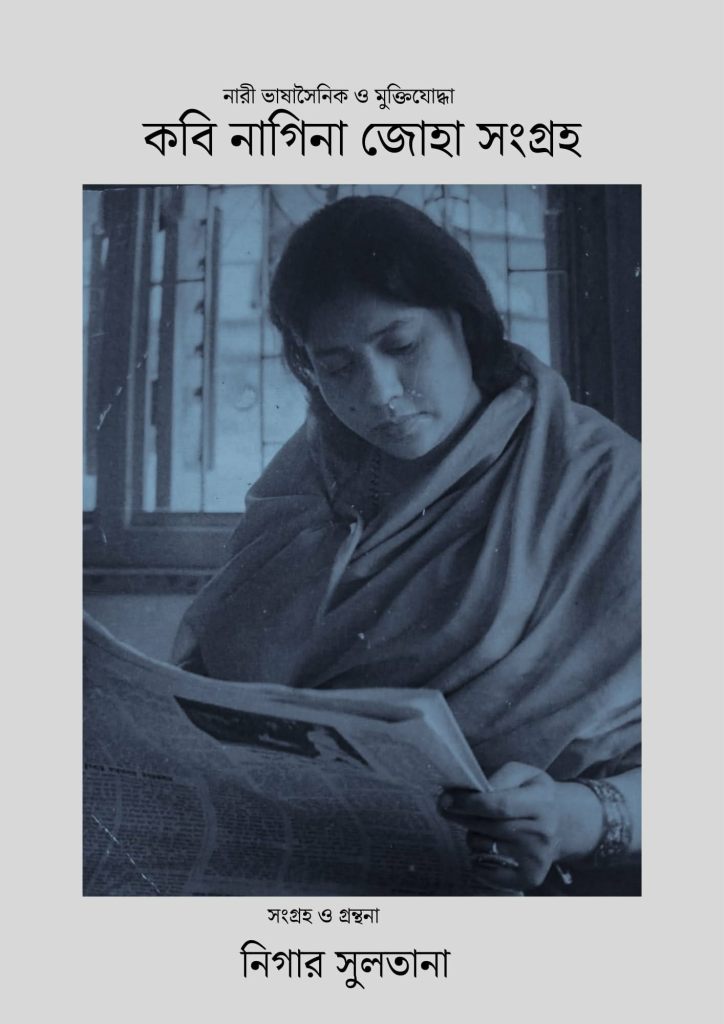
Nani was born and raised in India. I remember her telling me stories of her riding ponies and picking applies from trees. She moved to East Pakistan during 1947 Partition (moving from one country to another when both were the same country just the day before) with her parents and most of her siblings. Just few months after her marriage, as a young bride, she fought for her mother tongue to be Bengali in 1952. In 1971 she sent off her oldest two sons to fight in the Bangladesh Liberation War while she had to go back to her own country of birth as a refugee with rest of her family, to return to a new country called Bangladesh where she had to rebuild her home. Again.
Nani became a widow before she was even 50 years old. She was basically 8 years older than what I am now, when she lost the whole center of her universe. And while many feminists among us might ask rather angrily that why did a woman even make a man, or anyone at all, to be the center of her universe to begin with … and to that I would say that you should have met the incredible man that was my Nana. And trust me, given that my Nani was an actual warrior, she loved those she loved deeply and intensely, and she very much chose who the center of her life was going to be. For her, it was her beloved husband, my Nana.
My Nani was married off as a teenager to my Nana who was 12 years older than her. And what could have been a terrible story of an arranged marriage between two people who had not met each other and were of such a wide age gap, as is the case for so many couples in so many places especially in my part of the world and all the countries I have worked in, in the case of my Nana and Nani, it was instead the best love story that I have ever heard of and probably ever will, the kind of love that is birthed from mutual respect and friendship and shared experiences and joys and tragedies and sacrifices and compromises and liberation struggles and births of entire nations.
I was only 3 years old when my Nana passed away but he was kept alive for us by my Nani till she passed away. She teared up each time she spoke of him. I would think to myself that if someone can miss you so much with so much love and fondness and tenderness even decades after you have left this earth, it really must have felt so special to be loved like that and to be able to love someone like that. It was also a good reminder (at least for me) that anything less than that is not worth settling for.
In a country where we often see mothers prioritizing their sons over their daughters, my Nani loved each and every single of her children equally and my Ammu was her closest friend. For most of my life, my Nani had stayed with us, loving my father – who lost his own mother when I was only an infant – as much as she loved her own children.
She loved her children so deeply and purely that she passed away mostly from a broken heart just 2 years after she lost her oldest child and son, my Boromama. He was only 60 when he passed away, far away from everyone he loved and who loved him, and news of his death was so sudden and so unexpected that it literally knocked the wind out of our sails. Whoever had met my Uncle even once, he would climb to the top of their “favourite persons” list, so one can only imagine what his loss would do to his mother, who had him when she was merely 18 years old.
You know how we often see elderly widowed women portrayed on South Asian soap operas as either utterly helpless or utterly cruel, some as wilted wallflowers? Not my Nani! She was the garden herself, and in any given room, it is most likely that she would be the most interesting person there. The woman was brutally honest to a fault, and she would tell you like it was, as long as it was fair and deserved and most importantly, as long as it was the truth. She had a very low tolerance for disrespect, vulgarity and lies. She was feisty even until her last day on earth. Whenever I saw her in her element, I felt reassured that I could continue being like that too even when I turned old and gray!
She was easily the most beautiful woman I had ever seen, and easily the most elegant and classy (and sassy in equal measure), with always a jar each of Vaseline and Nivea by her side, which she applied to her face each night religiously.
Throughout her life she went through more than what most people do in 10 lifetimes and yet she somehow never took out her pain and trauma on anyone else, neither did she recount her past with even an ounce of bitterness, and if she did talk about the past, it was with mild nostalgia. In spite of all that she went through (or perhaps partly because of it), she was generous and fair, almost always fair, and funny, always funny (often without intending to be), often saying the funniest of things with all the sincerity in the world even in the most tragic of times, with her eyes closed while talking, as was her typical style (this “talking with eyes closed” was the subject of many family jokes … many a times, when she would go into her closed-eyes mode, we would duck and disappear from her eyesight to make her confused when she re-opened her eyes and to wonder if we were even there to begin with !).
She expressed herself best through her poetry. She could write on almost any subject.
I heard from my Ammu that Nani used to play the guitar beautifully. And the last time she ever played it was when my Nana was alive and never since. I wish I had heard her play at least once.
During the few years that my Nani and Ammu were physically apart (Ammu was living in the USA and my Nani in Bangladesh), my Nani would listen to Ammu’s recordings of Rabindra Sangeet songs as if she had never heard anything so melodious in her life.
Whenever my Ammu and I were not living in the same country (which has been mostly the case since I was 25 years old), Ammu and I would speak once every week or once every 2 weeks or so (I am not the best of phone conversationalists and usually I need to save at least 30 minutes for calls with my mother) but I knew for certain that my Ammu and Nani were definitely speaking at least once or twice daily. My Ammu would save up money from her salary each week to buy phone cards to call Nani.
My Nani’s favorite flower was rajnigandha (tuberoses). And strangely, ever since she left this earth 10 years ago, rajnigandha has never smelled the same for me.
She was one of the very few people I knew from her generation who had the capacity to apologize even to the youngest of us all if she had said or done something wrong or if we were hurt by something she said, and she would mean it.
While she often mixed-up names of her grandchildren and great-grandchildren, yet she never mixed up who each of us were for all the things that really mattered.
Nani was quite eager to see me get married (she famously once told me that even if I got divorced that I should get married at least once) while at the same time advising me to elope and not make a fuss if I ever liked someone enough to get married to and then another time telling me that I should just do what I wanted and travelled wherever I wanted to and to marry if and when I wanted to. I took her last advice to heart!
She was one of the very few people from my country in my immediate surroundings who ever wanted to know about the work I was doing, about which country I was working in, what the people there were like and what it was like to live there. She was interested in current events. She wanted to know what was going on in the world.
For a period of 2 years (on and off) I was living with my Nani in Dhaka while my Mom was in the USA. Between my mother, her mother and myself, we were not super into video calls for some reason, so instead, I would often overhear my Nani describing to my Ammu over the phone what I was looking like and what I was wearing on the day of the call (usually my Ammu would ask her each time).
Just as children want company and someone to play with when they are small, so do adults when they grow old – they just want someone to give them some time and to listen to them and talk to them. One of my Ammu’s biggest regrets is that she was not able to be in same city as her mother for the few years that they were living in different countries. One of my biggest regrets is that all the times I did sit down with Nani for a chat, I could have sat with her longer, instead of letting workplace stuff or some other mundane boring stuff bother me and occupy my headspace and keep me distracted and irritated. Because honestly, hanging out with Nani was a lot more fun and in hindsight, I should have just done more of that. I would definitely have been happier.
The last time I ever saw my Nani when she was alive, she was in pain and barely conscious lying on a bed in the ICU hooked up to machines. At the time, all I could think of was that how was she bearing all this pain at all, given that all of us in the family would stop breathing for a second or two every time Nani sneezed given that she always had a delayed reaction and a lot of the times she would feel chest pain afterwards (post-sneeze). I remembered thinking that if she had felt pain even after sneezing, then how was she managing with all the tubes sticking out of her veins all over her body and through her nose and mouth. Was she feeling pain when her body seemed to be shaking? Was she feeling pain when one after another of her organs kept shutting down? I kept thinking out loud for weeks afterwards that my Nani deserved a less painful death, that she should have just died in her sleep like I hear so many people doing, that she should not have died the way she had, until a friend of mine (who lost her father a while back) told me that there was really no good way for someone to die and sadly we don’t get to choose how we or our loved ones die, it is just something we have to learn to live with and come to terms with.
For several years I felt quite strange about the fact that out of all the days that my Nani had to leave this earth on, why did she have to die the day before my birthday ! I mentioned the thought out loud to a friend of mine, and he said that perhaps it was so that she never wanted me to forget her. I remember replying that anybody who had ever met her even once would never be able to forget her even if they wanted to. She was one of a kind. There was quite literally nobody else like her.
For the sake of being able to go on with the rest of my life where regrets and sense of loss and survivor’s guilt (there will be other days to tell stories of the latter) don’t keep me up at nights as much as they have been and already do, I would like to believe in a world where people go to after they die, one where they are reunited with the people they have loved and lost while they were alive. In that spirit, I would like to believe that my Nani is reunited with her parents that she lost when she was too young, with all her siblings, with her husband, and with her oldest child. Moreover, I would like to believe all of these beautiful and kind souls are laughing and chatting over tea and eggs-on- toast (Nani’s favourite snack / meal) and that they are in a world where there is finally no more pain and no fear of loss of one’s home and one’s loved ones.
While my Nani always said that she was so proud and happy to be Bangladeshi, and to call Bangladesh her home, I would also like to add that my country Bangladesh was lucky to have my Nani as well, given that my Nani was one of the many people who had done whatever they could risking their lives and everything else they had to make sure Bangladesh could even be born.
Rest in peace, Nani, wherever you are, and keep laughing down at us with your beautiful kind mischievous smile, while we clumsily stumble through our lives missing you terribly while we do so, until we meet you again on the other side.
 ST on the Go
Leave a comment